The Canadian animation industry has experienced unprecedented growth, with Toronto and Vancouver emerging as major creative hubs attracting talent from across North America. As studios like 9 Story Media Group, Sony Pictures Imageworks, and Atomic Cartoons expand their operations, the demand for skilled junior layout artists has reached new heights. In this competitive landscape, portfolio reviews have become the critical gateway that determines which aspiring artists will secure coveted entry-level positions.
Unlike traditional job applications that rely heavily on resumes and cover letters, animation studios place overwhelming emphasis on portfolio demonstrations. These comprehensive reviews assess fundamental skills including composition mastery, perspective accuracy, and camera work proficiency. Industry leaders like Syn Studio and Animation Portfolio Workshop (APW) have pioneered systematic approaches to portfolio evaluation, establishing criteria that have become standard across Canadian animation hubs.
Why Portfolio Reviews Matter in Canadian Animation Hiring
Portfolio reviews represent a fundamental shift from conventional hiring practices in the animation industry. While other sectors might prioritize academic credentials or previous work experience, Canadian animation studios focus almost exclusively on demonstrated artistic capability and technical proficiency. Toronto studios like 9 Story Media Group and Vancouver-based facilities such as Sony Pictures Imageworks have streamlined their hiring processes around portfolio assessments, recognizing that artistic skill translates directly to on-screen quality.
The success of this approach is evident in the career trajectories of graduates from programs developed by Syn Studio and APW. These organizations have documented numerous cases where strong portfolio presentations led directly to junior layout positions, even for candidates with limited professional experience. Studios consistently report that portfolio-based hiring results in better job performance and higher retention rates compared to traditional application methods.
Major Canadian animation hubs have embraced this model because it allows for immediate assessment of an artist’s problem-solving abilities under pressure. During live portfolio reviews, studios can observe how candidates respond to feedback, adapt their thinking, and communicate their creative process—all essential skills for collaborative animation production environments.
Junior Layout Artist Role Overview
Understanding the specific responsibilities of junior layout artists is crucial for appreciating why portfolio reviews focus on particular skill sets. These entry-level positions serve as the foundation for scene construction and visual storytelling in animation production.
- Creating initial scene compositions that establish mood, pacing, and visual hierarchy for animated sequences
- Executing accurate perspective drawings that maintain dimensional consistency across multiple camera angles
- Developing camera movement plans that enhance storytelling while respecting technical production constraints
- Collaborating with storyboard artists to translate 2D concepts into dimensionally accurate layout foundations
- Maintaining character scale relationships and environmental proportions throughout dynamic scene progressions
- Producing clean, organized files that integrate seamlessly with downstream animation and background departments
Canadian Studio Landscape
Toronto’s animation sector has experienced remarkable expansion, with studios like 9 Story Media Group, Nelvana, and Guru Studio establishing the city as a premier destination for television animation production. These facilities consistently seek junior layout talent capable of handling diverse project styles, from preschool programming to adult-targeted series. The demand has intensified as streaming platforms commission more original Canadian content.
Vancouver’s animation scene centers around feature film and high-end television production, with Sony Pictures Imageworks leading a cluster of studios specializing in visual effects and computer animation. The city’s proximity to Hollywood production schedules creates unique opportunities for junior artists to work on major releases while benefiting from Canadian tax incentives and training programs.
Key Criteria Studios Use in Portfolio Reviews
Canadian animation studios have developed sophisticated evaluation frameworks that assess technical fundamentals alongside creative problem-solving abilities. These criteria reflect the specific demands of professional production environments where junior layout artists must deliver consistent quality under tight deadlines.
Industry insights from Syn Studio and APW reveal that successful portfolios demonstrate not just artistic skill, but also understanding of production workflows and technical constraints. The following assessment framework has emerged as the standard across major Canadian facilities:
| Criterion | What Studios Assess | Common Pitfalls | Example Fix |
|---|---|---|---|
| Perspective Accuracy | Consistent vanishing points across multiple scene elements | Mixed perspective systems within single compositions | Establish horizon line before placing any objects |
| Composition Strength | Clear focal hierarchy and visual flow patterns | Cluttered layouts with competing focal points | Use value contrast to direct viewer attention |
| Environment Integration | Characters feel naturally placed within their surroundings | Characters appear pasted onto backgrounds | Match lighting direction and cast shadows consistently |
| Scale Relationships | Proper proportional relationships between all scene elements | Inconsistent character heights relative to environments | Establish ground plane grid for accurate measurements |
| Camera Understanding | Appropriate lens choices and camera positioning for storytelling | Random camera angles without narrative purpose | Study film language and shot composition principles |
| Technical Execution | Clean line work and organized file structure | Sketchy, unfinished presentation style | Develop confident, decisive line quality |
The Portfolio Review Process Step-by-Step
Understanding the typical portfolio review process helps junior artists prepare effectively for these crucial evaluations. Canadian studios have standardized many aspects of these sessions, creating predictable frameworks that benefit both evaluators and candidates.
The process typically spans 30-45 minutes and follows a structured format that allows studios to assess multiple competency areas efficiently. Feedback formats vary between studios, with some providing immediate verbal responses while others follow up with detailed written assessments.
- Initial portfolio submission through studio-specific online portals with predetermined file format requirements
- Preliminary screening by junior staff or automated systems checking for basic technical compliance
- Senior artist review focusing on artistic merit and production readiness assessment
- Scheduling of live review session with relevant department supervisors and potential team members
- Live presentation where artist walks through selected portfolio pieces explaining creative decisions
- Interactive critique session with real-time feedback and suggested improvements from studio reviewers
- Final assessment compilation and hiring decision communication within 1-2 weeks of review completion
Pre-Review Preparation Tips
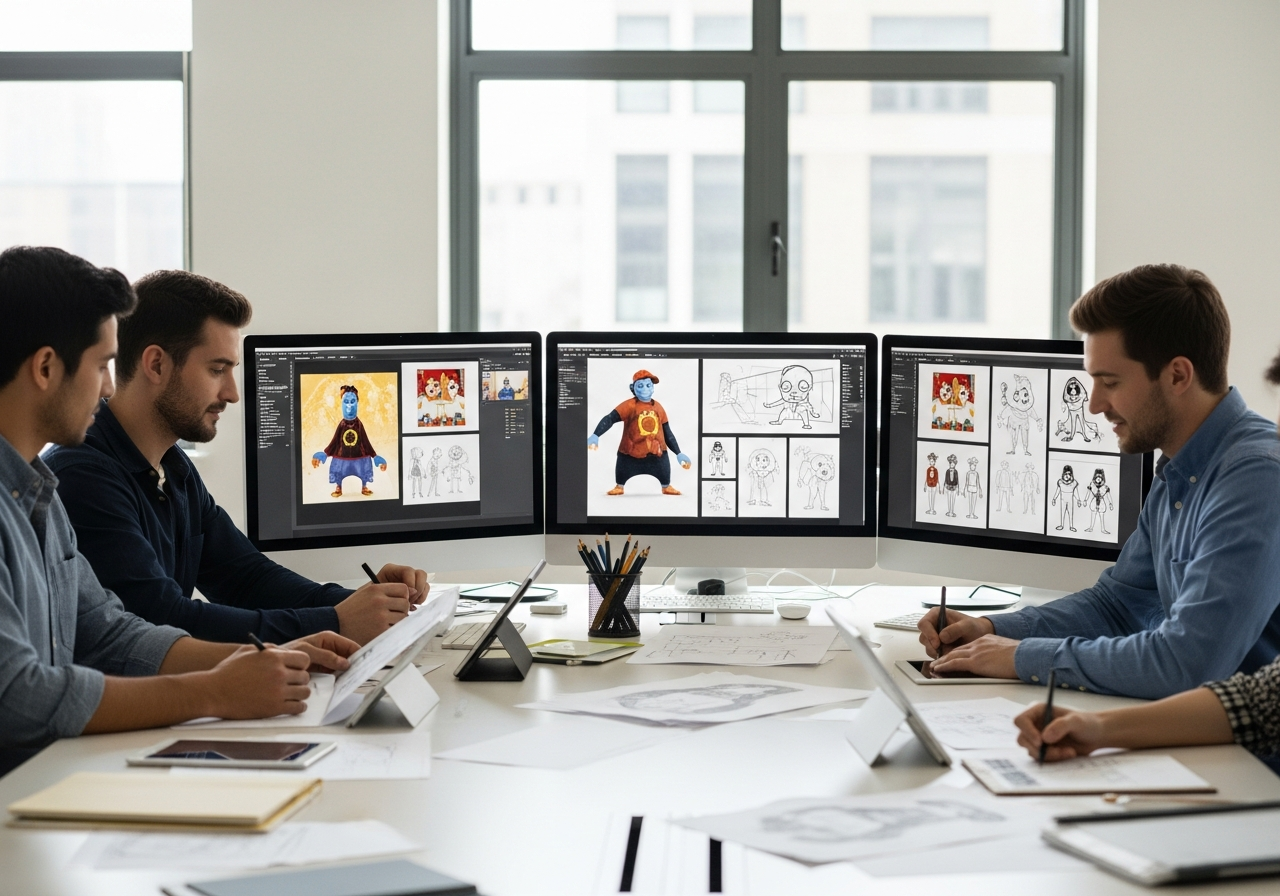
Successful portfolio reviews require careful preparation beyond simply assembling artwork. Artists should curate 10-15 pieces that demonstrate range while maintaining focus on layout-specific skills. Each piece should showcase different aspects of the layout artist role, from intimate character moments to complex environment designs.
Annotation becomes crucial during preparation, as reviewers appreciate understanding the artist’s thought process and problem-solving approach. Brief notes explaining lighting choices, perspective decisions, or compositional strategies help studios assess artistic reasoning alongside technical execution. This preparation phase often determines whether artists can effectively communicate their capabilities during the live review session.
During the Review Session
The live review session represents the culmination of portfolio preparation, requiring artists to present their work confidently while remaining open to feedback. Studios structure these sessions to maximize information gathering while respecting time constraints, typically allocating 3-4 minutes per portfolio piece for discussion and evaluation.
Successful candidates demonstrate collaborative spirit by engaging constructively with critique rather than defending creative choices defensively. Studios value artists who can incorporate feedback in real-time, adapt their thinking based on production requirements, and communicate clearly about their creative process. Time management becomes essential, as artists must balance thorough explanation with efficient pacing throughout the session.
Common Feedback Themes from Canadian Studios
Analysis of feedback patterns from major Canadian animation studios reveals consistent themes that emerge across portfolio reviews. These insights, gathered from industry professionals at facilities like Syn Studio and through APW testimonials, provide valuable guidance for junior artists preparing their presentations.
Studios consistently emphasize that technical proficiency must be balanced with creative problem-solving abilities. The most successful candidates demonstrate not just artistic skill, but also understanding of production constraints and collaborative workflows that define professional animation environments.
Feedback patterns reflect the specific demands of Canadian animation production, where studios often handle multiple projects simultaneously and require artists capable of adapting to diverse visual styles and technical requirements.
| Feedback Theme | Strength Example | Weakness Example | Studio Source/Quote |
|---|---|---|---|
| Gesture and Flow | Dynamic poses that convey clear action and emotion | Stiff, mannequin-like character positioning | “We need artists who understand that layout is still about performance” – 9 Story Supervisor |
| Design Confidence | Bold, decisive choices in composition and staging | Tentative, overworked drawings showing uncertainty | “Confidence shows in every line – we can teach techniques but not conviction” – APW Graduate |
| Structural Understanding | Clear grasp of form, volume, and spatial relationships | Flat, graphic approaches without dimensional thinking | “Layout artists must think like architects, not illustrators” – Sony Vancouver Lead |
| Production Awareness | Designs that consider downstream animation requirements | Beautiful but impractical compositions for animation workflow | “Portfolio pieces should work as animation foundations, not just pretty pictures” – Nelvana Review |
| Problem-Solving Approach | Multiple solutions demonstrated for complex staging challenges | Single approach without considering alternatives | “Show us your thinking process, not just final results” – Syn Studio Mentor |
Avoiding Red Flags in Layout Portfolios
Certain portfolio elements consistently trigger negative responses from Canadian studio reviewers, regardless of overall artistic quality. These red flags often overshadow positive aspects of a presentation and can eliminate candidates from consideration despite strong technical skills. Understanding these pitfalls helps junior artists avoid common mistakes that derail otherwise promising portfolio reviews.
Studios have identified specific patterns that indicate fundamental misunderstandings about layout artist responsibilities or production requirements. These issues suggest candidates may struggle with the collaborative, deadline-driven nature of professional animation production.
- Poor scale consistency where characters change size dramatically between shots without narrative justification
- Stiff, symmetrical layouts that fail to create visual interest or support storytelling dynamics
- Basic thumbnail-level work presented as finished pieces, showing insufficient understanding of layout refinement requirements
- Perspective errors that demonstrate lack of fundamental spatial reasoning necessary for dimensional scene construction
- Overrendered illustrations that prioritize surface detail over structural clarity needed for animation foundations
- Generic compositions copied from reference without original problem-solving or creative interpretation
Success Stories and Testimonials
The effectiveness of portfolio-based hiring in Canadian animation becomes evident through documented success stories from recent graduates and career changers. APW interviews consistently highlight transformative journeys where focused portfolio development led directly to junior layout positions at major studios. These testimonials reveal common patterns in how artists identify and address skill gaps through targeted portfolio work.
Many successful candidates describe initial portfolio reviews as wake-up calls that redirected their artistic development toward production-focused skills. Studios particularly value artists who demonstrate growth between initial review feedback and follow-up presentations, showing ability to incorporate critique and adapt their approach based on industry requirements.
Paths from Review to Junior Role
Tracking successful candidates from initial portfolio review through hiring reveals diverse pathways into Canadian animation studios. Some artists secure positions immediately following strong first presentations, while others benefit from iterative feedback cycles that gradually build portfolio strength and industry connections.
The most effective career transitions often involve strategic portfolio development guided by specific studio feedback, followed by targeted resubmission to facilities that provided constructive criticism. This approach demonstrates professional persistence and commitment to growth that studios value highly in junior hires.
| Artist Path | Key Feedback | Hire Outcome |
|---|---|---|
| Animation School Graduate | Strong fundamentals but needs production speed development | Junior Layout Artist at 9 Story after 3-month skill building period |
| Career Changer from Illustration | Excellent artistic skills requiring animation workflow adaptation | Contractor position at Sony leading to full-time junior role |
| Self-Taught Digital Artist | Creative problem-solving with perspective accuracy gaps | APW mentorship program leading to Nelvana junior position |
| Game Industry Transition | Technical proficiency needing animation timing understanding | Junior Layout role at Guru Studio with mentorship support |
| International Graduate Student | Strong technical foundation requiring Canadian production style adaptation | Direct hire at Atomic Cartoons following portfolio refinement |
Building a Standout Portfolio for Reviews
Creating a portfolio that captures studio attention requires strategic curation beyond simply assembling best artwork. Successful presentations demonstrate range while maintaining clear focus on layout-specific competencies that studios prioritize during evaluation. The most effective portfolios tell coherent stories about artistic capabilities while addressing practical production requirements.
Guidance from industry leaders like Syn Studio and APW emphasizes that portfolio strength emerges from thoughtful selection and presentation rather than volume of work. Studios consistently prefer focused collections that demonstrate mastery over scattered samples that suggest uncertainty or lack of direction in artistic development.
- Curate 12-15 pieces showcasing varied layout challenges from intimate character scenes to complex multi-character environments
- Include digital sketches and process work demonstrating problem-solving approach and creative development methods
- Focus composition studies on clear focal hierarchy and visual flow patterns that support narrative storytelling
- Demonstrate camera awareness through diverse shot types and angles that enhance dramatic impact
- Balance finished layout work with exploratory studies showing ability to iterate and refine creative solutions
- Organize presentation sequence to build momentum from strong opening piece through compelling portfolio narrative
- Prepare concise annotations explaining creative decisions and technical choices for each featured layout
Resources and Next Steps
Professional development opportunities specifically targeting Canadian animation industry requirements have expanded significantly as the sector continues growing. These resources address the unique challenges of preparing for portfolio reviews at Toronto and Vancouver studios, offering targeted skill development aligned with industry hiring practices.
The most valuable resources combine technical instruction with industry mentorship, providing aspiring layout artists with both skill development and career guidance from professionals currently working in Canadian animation production environments.
| Resource | Area of Improvement | Relevance to Canada |
|---|---|---|
| Animation Portfolio Workshop (APW) | Comprehensive portfolio development and industry mentorship | Direct connections to Toronto/Vancouver studio hiring managers |
| Syn Studio Master Classes | Layout fundamentals and production workflow understanding | Curriculum designed specifically for Canadian production standards |
| Sheridan College Continuing Education | Technical skills development and industry networking opportunities | Located in animation hub with strong studio connections |
| Toronto Animated Image Society (TAIS) | Professional networking and industry insight events | Direct access to Canadian studio professionals and hiring trends |